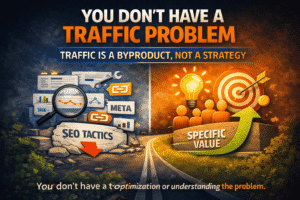

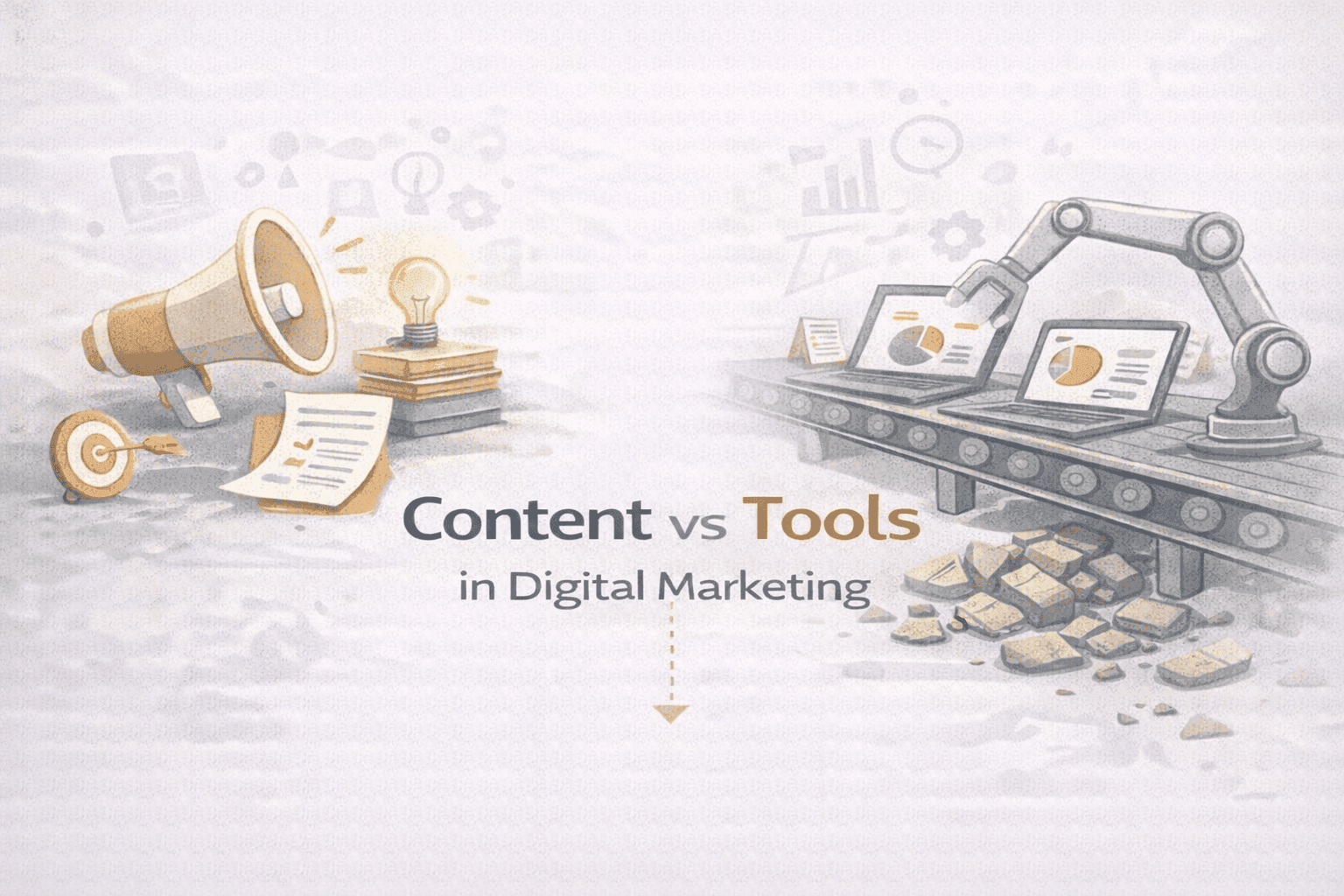
Most content creators eventually run into this question: content vs tools in digital marketing — which one actually matters more? It sounds like a simple comparison, but it usually shows up when something isn’t working the way it should. And the answer isn’t as straightforward as picking a side. We will discuss in full length in this article where the real problems lie when contents don’t achieve the desired results after a long time of creating and publishing them.
Table of Contents
By the Time You’re Asking This, Something’s Already Off
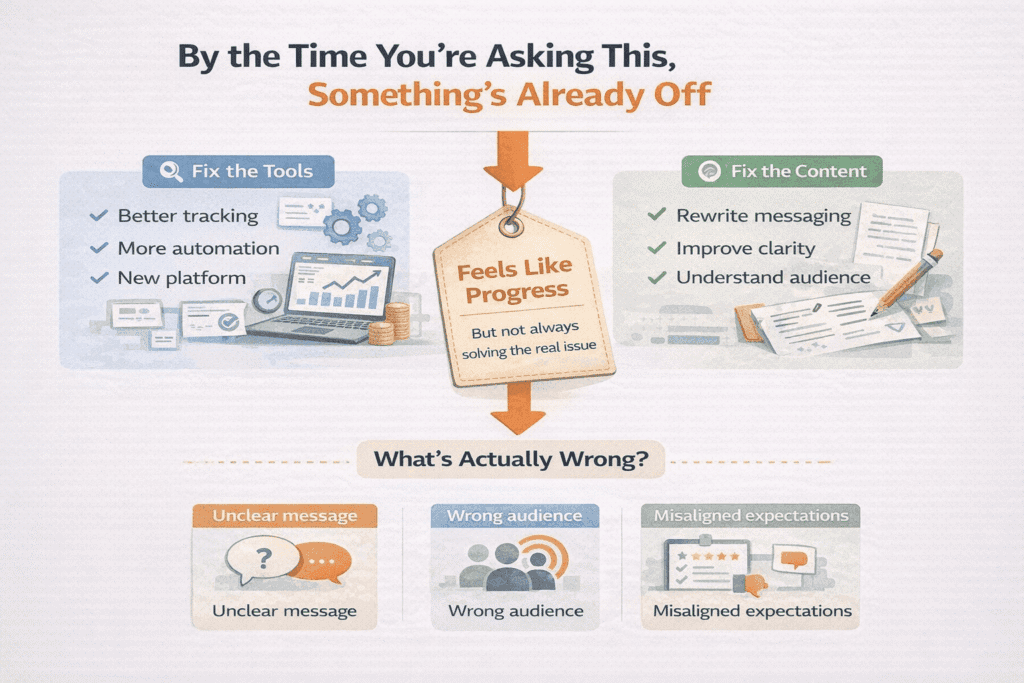
You don’t usually wake up and start thinking about content vs tools in digital marketing. That question shows up when something isn’t clicking anymore. Maybe traffic slows down or you’re publishing consistently but nothing’s really moving. Or everything just starts to feel heavier than it should — like you’re putting in the work, but not getting the same return. So you start looking around for what to fix. And this is where it gets a bit messy. Most people open a dashboard like Google Analytics and start looking for what went wrong.
Because both directions seem valid, you could say, “we need better tools” — something to automate, track, or optimize what’s happening. Or you could say, “the content just isn’t strong enough.” Both sound reasonable. Both feel like action. But what I’ve noticed is that the choice people make usually has less to do with what’s actually wrong and more to do with what feels easier to deal with.
Tools are concrete. You can sign up, set them up and watch something change with your work. But when Content success is slower, you have to think harder and rework things. Admit that what you’ve been putting out might not be landing the way you thought it was.
So the question becomes a kind of shortcut. Not intentionally — just conveniently. Instead of asking “what exactly isn’t working here?”, it turns into “which side should I focus on?” And that shift matters more than it seems. Because most of the time, the problem started earlier, that is before the tools and before the content was created. It is somewhere in how the message was shaped, who it was meant for, or what you expected it to do.
And once you miss that part, everything after it starts to feel like guesswork.
No One On The Other Side Cares What You Used
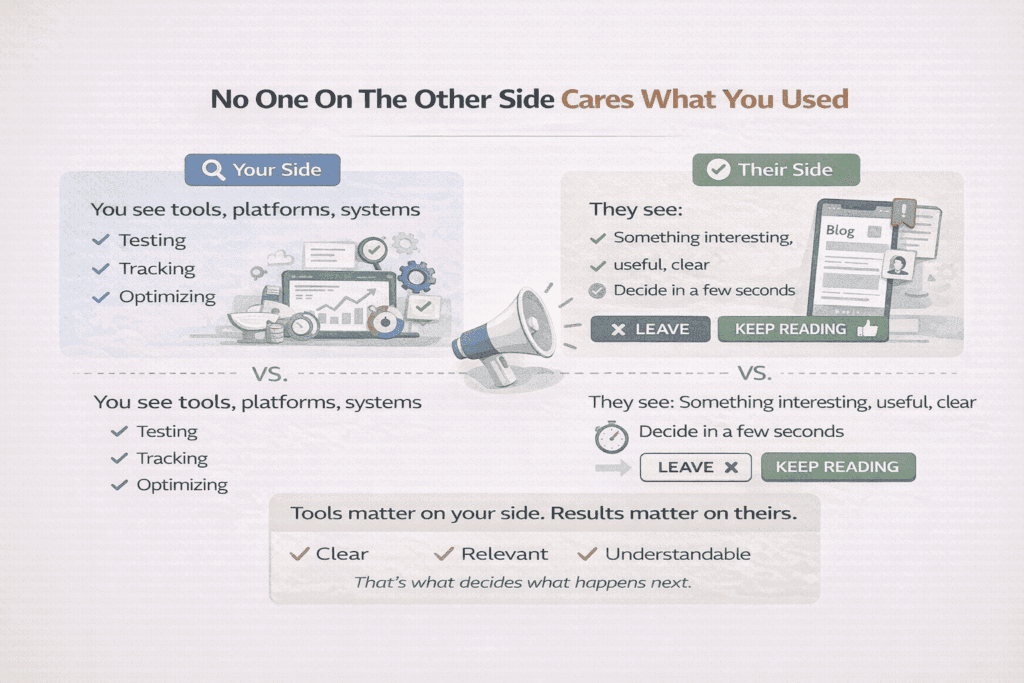
No one on the other side is thinking about your tools. They’re not sitting there wondering what you used to write the post, or which platform your funnel runs on. Most of the time, they’re barely giving you a few seconds. They either keep reading or they don’t. That’s it.
And this is where things quietly get out of sync. Because on your side, there’s a lot going on. You’re testing tools, tweaking setups, trying to make things more efficient. It feels like progress — and in some ways, it is. But none of that effort is visible where it actually matters.
What people react to is much simpler. They notice if something makes sense quickly, if it feels relevant, and if it actually holds their attention — the kind of signals often reflected in engagement metrics. If it sounds like it was written by someone who actually understands the problem they’re dealing with. Or they notice the opposite — and leave without thinking twice.
I’ve seen this happen more than people like to admit. Someone upgrades their tools, improves their workflow, even speeds up production and the results don’t change. Even with tools like MailerLite or ActiveCampaign, that gap doesn’t close if the message itself isn’t connecting. Not because the tools are bad, but because the message didn’t resonate with them.
And that’s the part that’s easy to miss — especially in conversations around content vs tools in digital marketing, where tools often get more attention than they deserve.
Tools can make you faster. They can make things cleaner. But they don’t automatically make anything more interesting or more useful. If the content feels flat, better systems just help you produce flat content more consistently.
Which is a strange kind of efficiency. So when something isn’t landing, it’s worth looking at it the way your audience does — quickly, and without context. No knowledge of your process. No appreciation for how much work went into it. Just: does this give me a reason to stay?
If the answer is no, it was never a tools problem to begin with.
Tools Make It Feel Like You’re Fixing Things
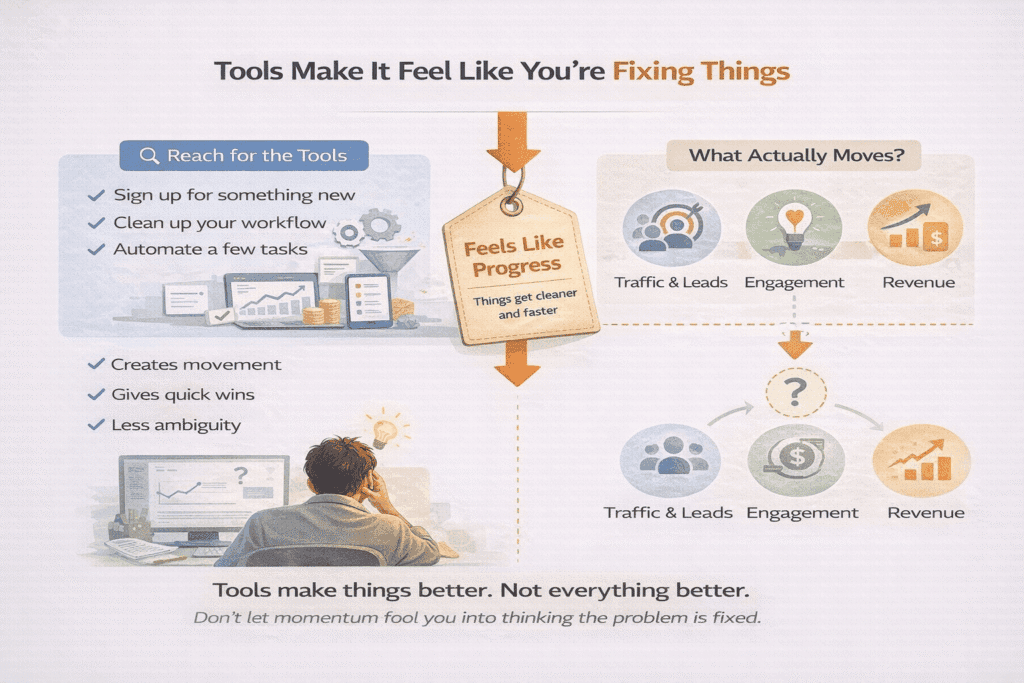
Tools are usually the first thing people reach for when something feels off. Not because they’re always the right answer — but because they’re something you can do immediately. You sign up for something new, connect a few things, maybe clean up a workflow and it feels like progress. There’s movement. You’re not stuck anymore. And honestly, that feeling alone can be enough to convince you you’re heading in the right direction.
I’ve fallen into that more than once. You start thinking, “maybe I just need better tracking,” or spending more time inside tools like Google Analytics trying to find a clear answer. And it sounds reasonable but it also lets you avoid sitting with a more uncomfortable question: what if the issue isn’t the setup at all? That’s often when people start comparing options like free vs paid marketing tools, hoping the right choice will fix the problem.
Because fixing tools is straightforward. Rethinking your content isn’t. One is technical while the other is a bit personal. It forces you to look at what you’ve been putting out and admit it might not be landing the way you thought. That’s a slower process. Less clear. No quick wins. So naturally, most people drift toward the side that feels manageable — which is exactly why conversations around content vs tools in digital marketing tend to lean heavily toward tools.
And here’s the part that’s easy to miss: tools don’t just help you work better — they can also help you stay busy in the wrong direction. You can spend hours improving systems that were never the bottleneck to begin with. Everything gets cleaner, faster, more organized but the results don’t really move.
It’s a strange kind of progress. The kind where your setup improves, but your outcomes don’t. That doesn’t mean tools are a bad investment. Far from it. When they’re solving the right problem, they’re incredibly useful. But they’re also very good at giving you something to fix when you’re not entirely sure what’s broken.
And that’s where things quietly go sideways. Because the more time you spend adjusting tools, the easier it becomes to assume the issue must be somewhere in the system — instead of stepping back and asking whether the thing you’re putting into that system is actually working.
When Results Drop, Content Is Usually Where It Started
When things start dropping, content is rarely the first place people look. It’s usually the numbers.
You open analytics, check traffic sources, maybe blame the algorithm for a bit. If you want to understand this better, it helps to look at what actually drives website traffic in the first place. Most of that data comes from platforms like Google Analytics, which can show you what’s happening — but not always why. It feels safer there. At least you can point to something and say, “this changed.” Looking at your content is different. It’s less clear what you’re even supposed to measure. And if you’re honest about it, it can get uncomfortable pretty quickly.
Because sometimes nothing obvious is wrong. You’re still posting. Still covering the same topics. Still following the structure that worked before. From your side, it feels consistent. Maybe even disciplined.
But then you look at the results — and they don’t match the effort anymore. That gap is where things usually start. What I’ve noticed is that content doesn’t usually fail all at once — it fades. A little less sharp. A little less specific. It starts sounding like something you’ve already said — or something everyone else is saying.
Not bad enough to stand out as a problem. Just not strong enough to carry results on its own. And that’s easy to miss, especially if you’re focused on staying consistent. Consistency can quietly turn into repetition if you’re not careful. You think you’re reinforcing what works, but from the outside, it just feels familiar in a way that makes it easier to scroll past.
There’s also this assumption that if something worked once, it should keep working if you repeat it closely enough. But content doesn’t really reward that. Context shifts. People change. What felt sharp before can start to feel obvious.
So you end up doubling down on something that’s already losing its edge — which is a common trap in discussions around content vs tools in digital marketing, where performance drops often get blamed on everything except the content itself.
To be fair, not every drop comes from content. Sometimes reach changes. Sometimes competition catches up. Sometimes it really is external.
But weaker content depends on everything else going right. Stronger content can survive friction. It still gets attention. It still connects. So when things start slipping, it’s worth doing something most people avoid.
Ignore the dashboard for a moment. Look at what you actually published — like someone seeing it for the first time, without context, without effort attached to it.
And ask yourself, honestly: would this still hold my attention if I didn’t make it?
That answer tends to be more useful than anything you’ll find in analytics.
There’s a Ceiling Content Hits on Its Own
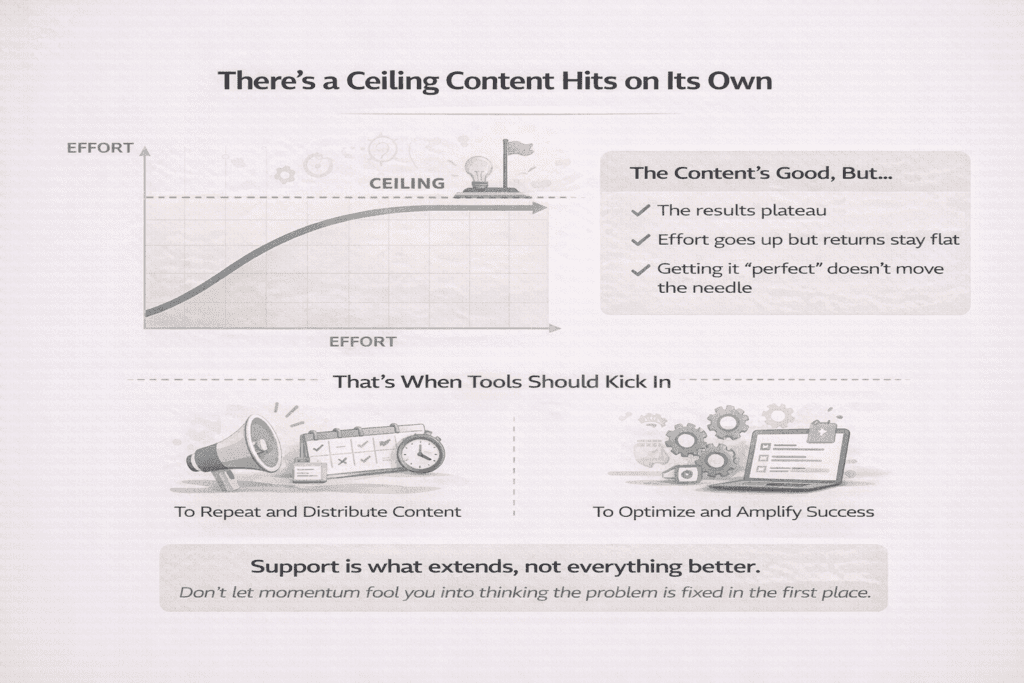
There’s a point where improving the content doesn’t really change the outcome anymore.
Not in a dramatic way. Just you notice the effort going up, and the results staying about the same. You spend more time refining things. You think harder about the angle, make it clearer, maybe even feel like “this one is better than the last few.” And then it goes out and performs almost exactly the same.
That’s usually where this starts to show up. It’s not that the content stopped working. It’s that it’s no longer the thing holding you back. And that’s a weird place to be, because up until then, the answer was simple: make it better. Sharper. More useful. And you’d see the difference.
Then suddenly, that effort stops compounding the way it used to. In my experience, this is where people either get stuck or get impatient. Some keep pushing harder on content, thinking they just haven’t “cracked it” yet. So they spend more time, more energy, trying to squeeze out improvements that barely move anything.
Others swing the other way and start adding tools, systems, automations — almost as a reaction. Not because they’re sure it’s the next step, but because doing something else feels better than being stuck. This is often where the conversation around content vs tools in digital marketing starts to surface.
The reality is a bit less dramatic. At some point, content needs support. Not because it’s weak, but because it can’t distribute itself. It can’t repeat itself. It can’t reach beyond the moment it’s published. Even really good content has a shelf life if nothing reinforces it.
That’s where systems start to matter — not as a replacement, but as a way to extend what’s already working. But there’s a catch that doesn’t get talked about much.
The moment you start thinking in terms of systems, it’s very easy to start thinking in terms of output, frequency, volume. And if you’re not paying attention, the content slowly loses the edge that made it work in the first place.
So you end up in a different kind of problem — more reach, less impact. It’s not a clean transition from content to tools. It’s more like content gets you far enough to need tools, and tools only work if they’re supporting something that was already worth paying attention to.
Scaling Too Early Is How Things Quietly Break
Scaling feels like the obvious next step.
You’ve got something going, things are starting to move, so the instinct is to do more of it. More content, more consistency, maybe a few tools to keep everything running smoothly.
On paper, it makes sense. But this is also where things start to slip — just not in a way you notice immediately.
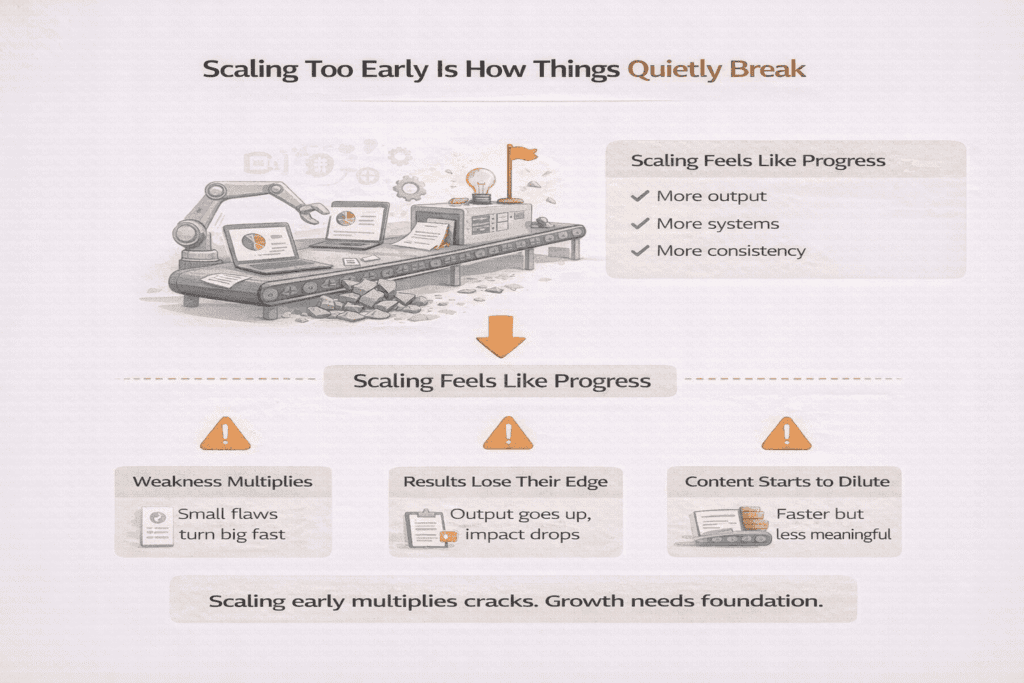
Early on, you’re close to everything. You can feel what’s working. You adjust quickly. If something’s off, you catch it before it spreads. Scaling changes that distance. Now you’re not just creating — you’re setting up a system that keeps creating, whether each piece really deserves to exist or not. And that’s where the quiet problem starts.
Because whatever you’ve been doing doesn’t just continue it gets repeated. Over and over. And if there’s even a small weakness in it — something slightly unclear, slightly generic, slightly off — it doesn’t stay small for long. It multiplies.
I’ve seen this happen in a way that looks like growth from the outside. More output, more structure, more “activity.” But underneath it, the actual impact doesn’t keep up. Sometimes it even drops.
And it’s confusing when you’re in it.
Because everything feels like it’s improving. You’re more organized. More consistent. You’ve removed friction. The system is doing exactly what you built it to do. It’s just not producing better results. That’s usually the signal.
Not that scaling is wrong — but that what you scaled wasn’t strong enough yet. This is one of the more overlooked realities in conversations around content vs tools in digital marketing, where scaling often leans too heavily on tools before the content is fully proven.
There’s also something else that creeps in once you start optimizing for scale.
You begin to think in terms of output, speed, consistency. And without really noticing, the work shifts. It becomes easier to create — but a little harder to care about. And that edge you had earlier? The one where you were thinking more carefully, writing more intentionally it gets diluted. Not all at once but gradually. And the uncomfortable part is, systems don’t question that. They just keep running.
So the issue isn’t scaling itself. It’s how easy it is to scale something before you’ve really proven it’s worth repeating in the first place.
The Shift Isn’t More Tools — It’s Better Decisions
There’s a point where adding another tool just doesn’t do anything anymore.
You can try a new platform, tweak your setup, improve your workflow — and it all technically works. Things get cleaner, faster, more organized. But the actual results? They don’t really move. That’s usually where the shift needs to happen. Not in what you’re using — but in how you’re thinking because up until then, it’s easy to believe progress comes from adding something: A better tool, a smarter system, a more efficient way of doing things. And sometimes that’s true.
But eventually, you run into a different kind of problem. Nothing is obviously broken. There’s no clear fix. Just this sense that what you’re doing isn’t as effective as it should be.
And that’s harder to deal with. In my experience, this is where better decisions start to matter more than better tools — a shift that often gets overlooked in conversations around content vs tools in digital marketing. And when tools do make sense, knowing how to choose the right marketing tools for your business becomes a lot more important.
Not big, dramatic decisions either but Small ones: What you choose to focus on, What you decide to ignore, What you keep doing even when it’s not giving much back. That last one is more common than people think.
A lot of things in marketing “kind of work.” They don’t fail, but they don’t really move anything either. And if you’re not careful, you keep investing time into those middle-ground efforts because they feel safe. Better decisions usually mean letting go of those which is uncomfortable, because now you’re doing less — at least on the surface. You might publish less.
Cut down on things that looked productive. Spend more time thinking through what you’re actually trying to say before you say it. It doesn’t feel like momentum. It feels like hesitation. But over time, that’s where things start to sharpen.
You notice patterns more clearly. You see what actually connects versus what just fills space. And once that becomes obvious, you don’t need as many tools to tell you what to do.
At that point, tools become simpler. Not something you rely on to figure things out — just something you use to support decisions you’ve already made. And that’s a very different place to be than where most people start.
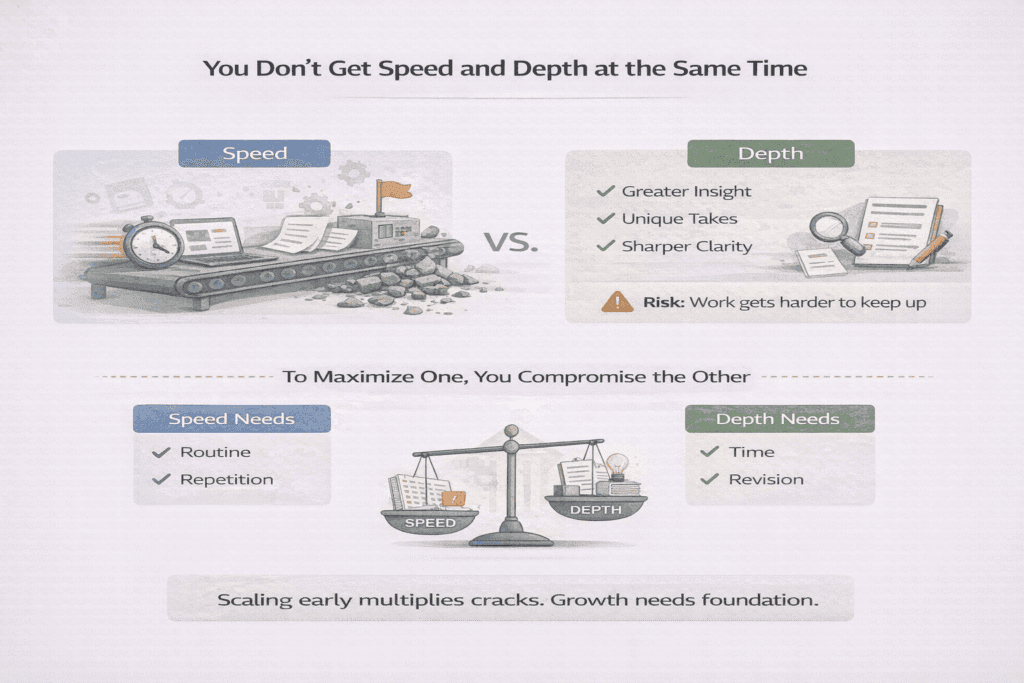
You Don’t Get Speed and Depth at the Same Time
Speed and depth don’t really get along. You can try to force it — most people do — but usually one starts to give way to the other. When you’re moving fast, you’re not thinking as much. You’re relying on patterns, instincts, things that worked before. That’s how you keep output consistent. That’s how you stay visible.
And to be fair, that matters. But there’s a point where you can feel the difference in the work. It starts sounding familiar, easier to produce, but also easier to ignore.
I’ve noticed this especially when you’re in a rhythm of publishing regularly. You tell yourself you’re being consistent — which is true — but at the same time, you’re not really pushing your thinking any further than where it already is.
Depth asks for something else.
It slows you down in a way that feels almost inconvenient. You sit with an idea longer. You rewrite more than you expected. You question whether what you’re saying is actually clear — or just sounds right.
And that kind of work doesn’t fit neatly into a schedule. You can’t really batch it. You can’t rush it without losing something important. So you end up in this tension — something that often gets overlooked in discussions around content vs tools in digital marketing, where speed is easier to optimize than depth.
If you lean toward speed, things keep moving. You feel productive. There’s always something going out. But over time, the work can flatten out. Not bad — just not that interesting anymore.
If you lean toward depth, everything gets quieter and slower. You might even feel like you’re falling behind. But the pieces you do put out tend to carry more weight.
The uncomfortable part is that you don’t get clear feedback right away. Speed gives you quick signals. Depth takes longer to show whether it mattered. And that delay is where most people pull back. So they go back to: speed, more output, more consistency. Which works — up to a point.
But if you’re not careful, you end up building a system that makes it easier to produce content and harder to produce anything that actually stands out.
It’s not really about choosing one forever. It’s about noticing which one you’re defaulting to — and whether that’s actually helping, or just keeping things moving without improving them.
If You Had to Pick, One Actually Carries More Weight
If you really had to pick, it’s not a fair fight. One side does more of the heavy lifting. And it’s the content. You can feel this pretty quickly when you strip things down.
Take away the tools, the systems, the optimizations — if what you’re putting out actually connects, it still works. Maybe slower. Maybe less polished. But it moves. People respond. Something happens. Now try it the other way around.
Keep all the tools. Make everything clean, efficient, well-structured but weaken the content. It falls apart fast. You might still see activity — clicks, impressions, things happening on the surface — but it doesn’t go anywhere meaningful. It doesn’t stick. It doesn’t build anything.
I’ve seen people try to compensate for that gap with better tools, more automation, better tracking, smarter systems. But all that really does is make the same message travel further without making it any stronger — which is a common trap in the whole content vs tools in digital marketing conversation.
And that’s the part that usually gets missed. Tools extend reach. They don’t create impact. Content is where the weight sits. It’s the part that carries the idea, the clarity, the reason someone pays attention in the first place. Without that, everything else is just movement without meaning.
That doesn’t mean tools don’t matter. They do — especially once something is already working. They help you repeat it, scale it, get more out of it. But they don’t replace the core of it. If anything, they make the difference more obvious. Because when the content is strong, even simple setups can perform. And when it’s not, no setup really saves it.
This Question Gets Easier When You Stop Framing It Wrong
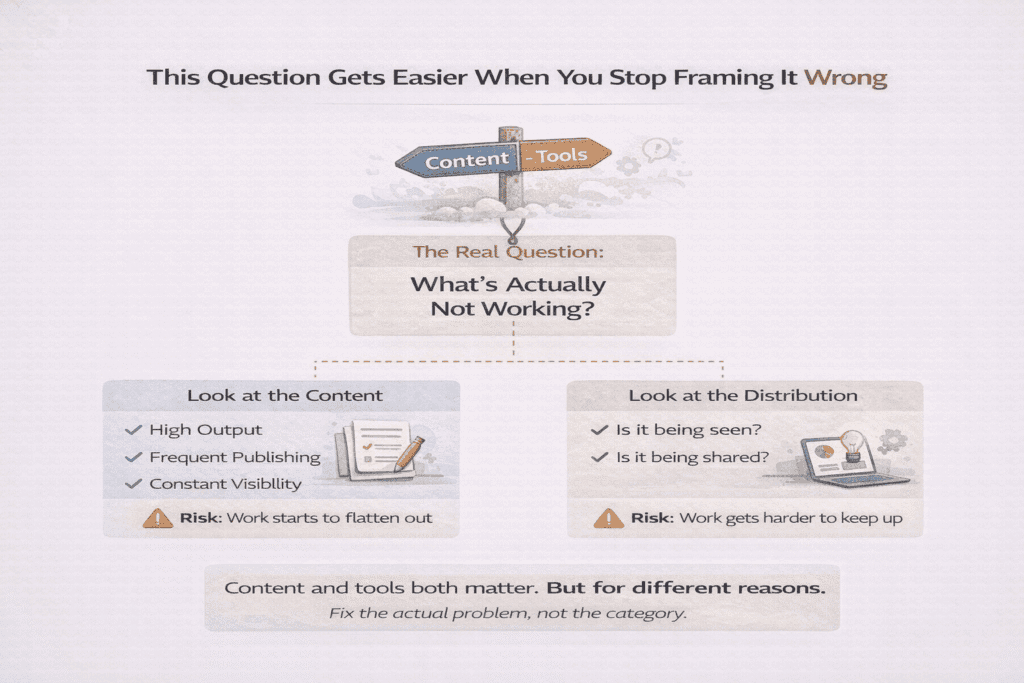
The problem isn’t really the question of Content vs Tools. It’s how it’s being asked.
When you frame it as content vs tools, you’re already setting yourself up to look at it the wrong way. It turns something that’s situational into something that sounds like a fixed choice. And that’s where people get stuck.
Because now you’re trying to decide which one “matters more”, instead of asking what’s actually not working. Those are completely different directions. I’ve noticed that once you step out of that framing, things get a lot clearer — sometimes uncomfortably clear.
You stop thinking in categories and start looking at what’s in front of you. Is the content actually connecting? Or does it just sound right? Are people seeing it enough? Or are you expecting results from something that barely gets distribution?
Sometimes the answer is obvious once you look at it properly. Other times, it’s not — and that’s fine too. But at least you’re asking a question that can lead somewhere. Because “content vs tools in digital marketing” doesn’t really have a clean answer.
It depends on timing, context, what stage you’re in, what you’ve already figured out, and what you haven’t. What you’ll notice over time is that people who are getting consistent results don’t spend much time debating this. They’re too busy adjusting.
If something isn’t landing, they look at the content. If something isn’t reaching, they look at the system around it. No big philosophical debate. Just small, practical corrections. And that’s probably the simplest way to think about it.
Once you stop trying to pick a side, you can actually see the problem for what it is — and that’s usually where the answer was the whole time.
The Real Question Was Always Something Else
You can keep going back and forth on this — content or tools — and still not get any closer to fixing what’s actually off. Because most of the time, that’s not the real decision you’re making.
Something feels slow or stuck. Or just not working the way it should. And this question shows up as a way to deal with that. It gives you something to compare, something to adjust, something to act on.
But it also pulls your attention slightly away from the uncomfortable part. Which is figuring out what’s actually not holding up right now. Sometimes it’s the content. It’s not landing, not clear enough, not specific enough to make anyone care.
Sometimes it’s everything around it. Good work, just not reaching far enough to matter. And sometimes it’s harder than that — a mix of both, or something you can’t immediately point to. That’s normal. What changes over time is not that you finally “figure out” whether content or tools matter more. It’s that you stop needing the question.
You look at what’s in front of you, see what’s missing, and adjust without turning it into a bigger debate than it needs to be. And that’s a quieter way to work. Less certain, maybe. But a lot more honest.